
Tools
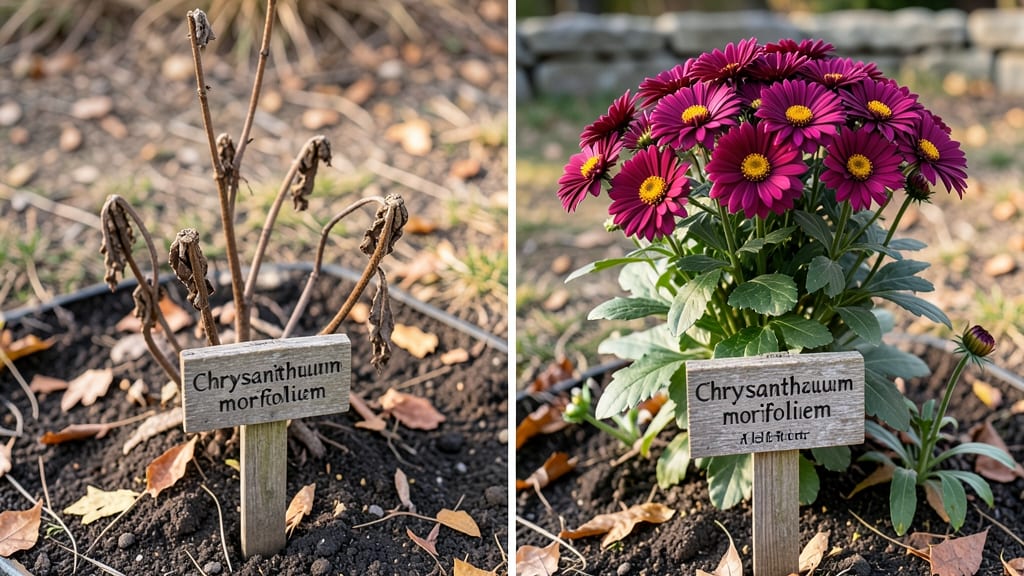
Garden mums do not come back every year unless they are perennial varieties like 'Autumn Joy' or 'Purple Dome,' which thrive in zones 5-9 with proper winter care. Most store-bought mums are annuals and die after flowering. Perennial types require mulching and protection in cold climates to regrow annually.
Most garden mums you buy at nurseries or big-box stores are bred as annuals—they flower beautifully in fall but won't survive winter to return next year. 🌿 The key difference lies in their root systems: perennials store energy underground during winter, while annuals don't. Even if you replant cuttings from annual mums, they won't reliably regrow.
For true repeat blooms, focus on cold-hardy perennial varieties and give them proper winter protection.
Here's the good news: with the right care, perennial mums can thrive for years. I've seen 'Autumn Joy' plants in my zone 6 garden return stronger each fall after just adding 3-4 inches of mulch in late autumn.
The secret is protecting their roots from freeze-thaw cycles while still allowing airflow to prevent rot.
💡 In This Article
- Perennial vs. Annual Mums: Key Differences
- Winter Care Tips to Encourage Perennial Mums
Perennial vs. annual mums: key differences
Perennial garden mums store energy in their roots during winter, allowing them to regrow each spring. This energy storage happens through specialized cells called parenchyma that accumulate starches, similar to how potatoes store energy.
Annual mums, however, don't develop this storage system—they focus all their energy on flowering during their single growing season. 🌱 The botanical difference lies in their life cycles: perennials like 'Autumn Joy' complete their growth cycle over multiple years, while annuals complete it in one season.
Hardiness zones play a critical role in determining which mums will return. Perennial varieties like 'Purple Dome' thrive in zones 5-9, where winter temperatures rarely drop below -20°F. In colder zones (3-4), even perennials need extra protection.
Annual mums, bred for vibrant fall color, typically survive only in zones 7-10. The key distinction is that perennial mums develop a woody base at their crown, while annuals remain herbaceous and vulnerable to freeze damage.
What most gardeners don't realize is that even perennial mums need proper winter care to regrow. Their root systems require protection from both cold and moisture fluctuations. Without this, the stored energy depletes faster than it can regenerate.
For example, 'Autumn Joy' mums in my zone 6 garden return reliably only when I add 3-4 inches of mulch in November—this creates an insulating layer that maintains soil temperature around 32-40°F, preventing root damage.
Commercial mums are bred as annuals because they produce more vibrant flowers in their first year, making them attractive to consumers. However, this comes at the cost of longevity. Perennial mums, while often less showy initially, develop stronger root systems over time.
The trade-off is worth it if you want mums that return year after year with minimal effort after the first season.
Consider this comparison: Annual mums are like fireworks—they put on a spectacular show but disappear. Perennial mums are more like a well-tended bonsai tree: their beauty grows deeper and more rewarding with each passing year.
The secret lies in their ability to photosynthesize early in spring, using stored energy to fuel new growth before summer heat arrives.
For gardeners in zones 5-9, perennial mums offer a sustainable solution. They require 50-70% less replanting over time compared to annuals. The initial investment in proper winter care pays off with vibrant fall blooms for years to come—something annuals simply can't match. 🌿