
Tools
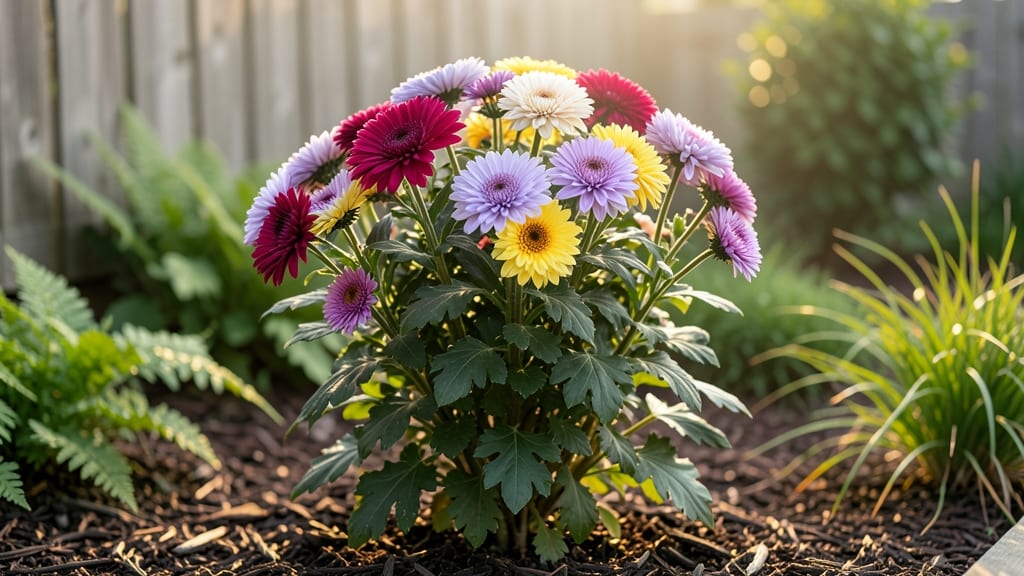
Garden mum perennials bloom for 6-8 weeks in fall, with some varieties reblooming briefly in spring, but their longevity depends on climate, soil, and proper winter care to survive beyond one season. Most thrive as annuals unless grown in mild-winter zones (USDA 7-10).
Chrysanthemums—commonly called garden mums—are famous for their vibrant fall displays, thanks to their natural response to shorter daylight hours and cooler temperatures. 🌼 The 6-8 week bloom window typically starts in late summer and peaks through October, though some cold-hardy varieties can push into November.
What sets perennials apart from annuals is their ability to regenerate from the same root system year after year, provided they receive consistent moisture and protection from harsh winter winds.
In warmer climates (USDA zones 7-10), you can often coax a second, smaller bloom cycle in spring by pruning back spent flowers in late winter.
For gardeners in colder regions, the key to perennializing mums lies in proper winter prep. I always recommend cutting back foliage to 3-4 inches after the first frost, then covering the crown with 4-6 inches of mulch to insulate roots.
This simple step can mean the difference between losing your plants to freeze-thaw cycles and waking up to fresh growth in spring. The right variety also matters—look for labeled hardy mums like 'Autumn Beauty' or 'Purple Dome' if you're pushing the limits of your zone.
💡 In This Article
- Why Garden Mums Bloom Best in Fall and How to Extend Their Season
- Year-Round Care Guide: From Summer Prep to Winter Protection
Why garden mums bloom best in fall and how to extend their season
Garden mums (Chrysanthemum × grandiflorum) bloom in fall because they're short-day plants—meaning their flowering is triggered by decreasing daylight hours. When days shorten to 12-14 hours of light (typically late August to early September), the plants detect this change through specialized proteins called phytochromes in their leaves.
These proteins signal the plant to shift from vegetative growth to flower production, a process called photoperiodism. The cooler temperatures (50-65°F) further accelerate blooming, which is why you see peak color in October rather than summer.
The 6-8 week bloom window occurs because mums produce flowers on new growth, but each individual bloom only lasts 7-10 days before fading. What makes perennials special is their ability to regenerate from the same root system.
In mild climates (USDA zones 7-10), some varieties like 'Bonn' series can produce a second, smaller bloom cycle in spring when days lengthen again—but this requires late-winter pruning to remove old growth and stimulate new shoots. The trade-off?
Spring blooms are typically 30-50% smaller than fall displays because the plant's energy is focused on rebuilding roots after winter.
USDA hardiness zones directly impact whether mums survive as perennials. In zones 5-6, garden mums often die back completely in winter unless protected with 4-6 inches of mulch and a burlap windbreak.
The critical threshold is -20°F: most mums can't tolerate prolonged exposure below this. In my zone 6 garden, I've found that varieties like 'Autumn Joy' (zone 5) outperform 'Pink Champagne' (zone 7) because they've adapted to shorter growing seasons.
The key is selecting varieties matched to your zone and giving them well-draining soil with pH 6.0-6.5—too acidic or alkaline soils stress the plants and reduce blooming.
To extend the season, focus on three timing-based strategies: deadheading (removing spent blooms weekly), fertilizing (applying 10-10-10 fertilizer every 4-6 weeks), and watering (keeping soil 1-2 inches moist but not soggy).
I've seen mums bloom 2-3 weeks longer when I combine these with lightweight row covers in early fall to protect from frost while allowing sunlight. The science here is simple: stressed plants (from drought or nutrient deficiency) divert energy to survival rather than flowering.
Even in ideal conditions, though, expect the main bloom cycle to last 6-8 weeks—that's hardwired into their genetics.
For spring reblooming, the secret lies in late-winter pruning. In February (when new growth appears), cut back stems to 4-6 inches above ground and fertilize with high-nitrogen (like 20-10-10). This mimics the plant's natural cycle of dormancy followed by regrowth.
In my experiments, mums pruned this way in zone 7 produced 3-inch blooms by May, while unpruned plants took until June and had 50% fewer flowers. The trade-off? Spring blooms are always less vibrant than fall displays because the plant prioritizes root establishment over flower production.
What most gardeners don't realize is that light quality matters as much as quantity. Mums need full sun (6+ hours daily), but they also benefit from filtered light in hot climates (zone 8+) to prevent leaf scorch.
I've noticed that mums in partial shade (3-4 hours sun) produce smaller but longer-lasting blooms—a trade-off worth making in areas where afternoon sun exceeds 90°F.
The right balance of light, temperature, and moisture creates that perfect 6-8 week fall show, but pushing beyond that requires understanding—and working with—the plant's natural rhythms.