
Light Requirements
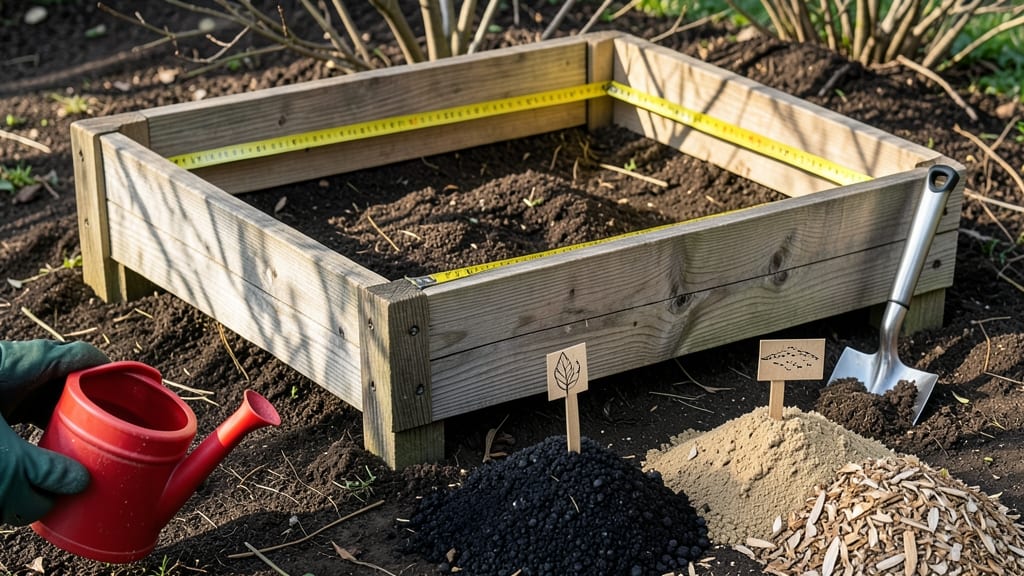
Calculating how much soil for a raised garden bed starts with cubic feet: multiply the bed's length × width × depth (in feet), then adjust for drainage layers. A standard 4×8-foot bed with 12-inch soil depth requires 32 cubic feet of soil.
This calculation ensures you buy the right amount without over- or under-purchasing. 🌱 For example, a 4×12-foot bed with 12-inch depth needs 48 cubic feet, while an 8×8-foot bed with 18-inch depth requires 96 cubic feet.
Remember to account for drainage layers—gravel or landscape fabric at the bottom reduces usable soil volume. Many gardeners convert cubic feet to cubic yards (1 yard = 27 cubic feet) or bags (1 cubic foot ≈ 1 bag), but bulk purchases are often cheaper for larger beds.
Pro tip: Measure your bed's interior dimensions (not exterior) and subtract any drainage space. If you're mixing soils, calculate each component separately—like 60% topsoil, 30% compost, and 10% perlite—to avoid running short mid-project. I always add 5-10% extra to account for settling and future top-ups.
💡 In This Article
- Calculating Raised Garden Bed Soil Volume by Dimensions
- Best Soil Mixes and Cost-Saving Tips for Raised Beds
Calculating raised garden bed soil volume by dimensions
When calculating soil volume, start by converting all measurements to feet—this ensures consistency in your cubic foot calculation. For a 4×8-foot bed with 12-inch soil depth, convert 12 inches to 1 foot (12 ÷ 12 = 1).
Multiply length × width × depth: 4 ft × 8 ft × 1 ft = 32 cubic feet. This is your base measurement before accounting for drainage layers. 🌱 The key here is precision—even a 1-inch error in depth can mean buying 3-4 extra bags unnecessarily.
Drainage layers significantly impact usable soil volume. If your bed includes 4 inches of gravel at the bottom (standard for drainage), subtract that from your total depth.
For a 12-inch soil depth, the actual soil layer becomes 8 inches (2/3 ft), reducing the calculation to 4 × 8 × 0.67 = 21.76 cubic feet. Many gardeners skip this step and end up with a muddy mess or insufficient growing space.
Pro tip: Use landscape fabric between soil and gravel to maintain separation and prevent clogging.
Common bed sizes follow predictable patterns. A 4×12-foot bed with 12-inch soil depth requires 48 cubic feet, while an 8×8-foot bed with 18-inch depth needs 96 cubic feet. These numbers assume no drainage layer—always adjust downward if your design includes gravel or rocks.
For visual learners, sketch your bed's cross-section to map out layers before calculating. This helps avoid surprises when you're halfway through filling the bed.
Converting cubic feet to more practical units saves confusion. One cubic yard equals 27 cubic feet, so our 32 cubic feet example converts to 1.19 cubic yards. Most bulk soil suppliers sell by the yard, so rounding up to 1.25 yards ensures you have enough.
For bagged soil, 1 cubic foot ≈ 1 bag, meaning you'd need 32 bags for our standard bed. Bulk purchases are cheaper but require proper storage—topsoil can weigh 2,000 lbs per cubic yard, so plan for heavy lifting or delivery.
Real-world adjustments matter. Soil settles over time, especially in clay-heavy mixes, so add 5-10% extra volume to your calculation. For our 32 cubic feet example, that’s 3-4 extra cubic feet.
I once filled a 4×8 bed with 36 cubic feet (11% extra) and still had to top it up after the first rain—don’t make my mistake! Also consider future amendments like compost or perlite, which may require additional space.
For irregularly shaped beds, divide the space into rectangles and calculate each section separately. For example, a 6×6-foot L-shaped bed could be split into a 4×6 and 2×6 section. Calculate each area independently, then sum the totals.
This method works for curved or multi-tiered beds too, though you’ll need to estimate average depths. Precision here prevents costly overages or frustrating shortages mid-project.
Remember: the goal isn’t just to fill the bed—it’s to create an optimal growing environment. Too little soil means shallow roots, while too much can lead to waste and compaction.
Strike that balance by measuring carefully, accounting for drainage, and planning for future adjustments. Your plants (and your back) will thank you! 💫