
Watering
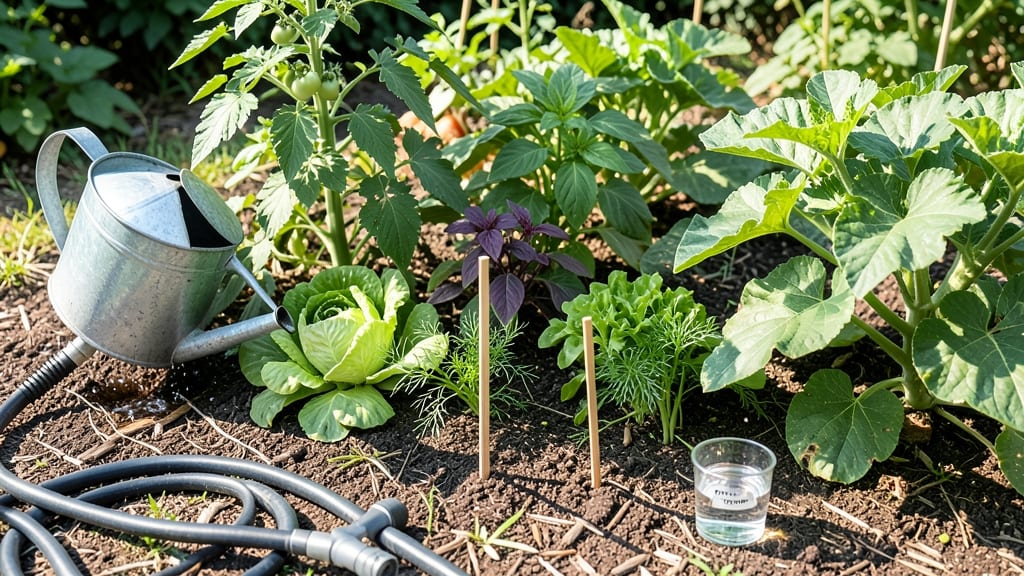
Watering your vegetable garden every day may seem like the safest bet, but it could actually be harming your plants more than helping them.
Picture this: your tomatoes are wilting, your peppers look sad, and your herbs are yellowing—yet you’ve been watering them religiously. The truth is, most vegetables don’t need daily hydration, and overwatering can lead to root rot, wasted water, and even nutrient loss.
The key lies in understanding how much moisture your plants truly need and when.
Soil type, weather, and plant variety all play a role in determining the perfect watering schedule. Sandy soil drains quickly, while clay holds moisture longer. Leafy greens like lettuce prefer consistent dampness, while root crops like carrots thrive with deeper, less frequent watering.
Learning these differences can save you time and frustration—and your plants.
In this guide, I’ll break down the science behind plant hydration, show you how to spot overwatering signs, and give you a customizable schedule based on your garden’s specific needs. No more guesswork—just a thriving, efficient harvest.


How often should you water vegetables: the science behind plant hydration needs
Watering vegetables isn't just about keeping soil damp—it's about maintaining the root zone moisture where nutrients and oxygen exchange happens. Most gardeners overestimate how often their plants need water, leading to wasted resources and stressed plants.
The key lies in understanding how soil type and plant physiology interact with your local climate.
For example, sandy soils drain quickly and may need watering twice daily in hot weather, while clay soils hold moisture for weeks. Leafy greens like lettuce prefer consistent moisture, while root crops like carrots thrive with deeper, less frequent watering.
Let's break down the science to create a watering schedule that works for your garden.
📊 Key Factors for Watering Frequency:
| Plant Type | Water Needs | Frequency (Summer) | Signs of Stress |
|---|---|---|---|
| Leafy Greens (Lettuce, Spinach) | 1-2 inches soil moisture | Every 1-2 days | Wilted leaves, bitter taste |
| Root Crops (Carrots, Beets) | 2-3 inches soil moisture | Every 3-4 days | Cracked soil, stunted growth |
| Fruiting Plants (Tomatoes, Peppers) | 1.5-2.5 inches soil moisture | Every 2-3 days | Blossom end rot, yellow leaves |
| Herbs (Basil, Cilantro) | 0.5-1 inch soil moisture | Every 1-2 days | Drooping stems, slow growth |
| All Vegetables | Deep watering (6-8 inches) | Early morning | Pest attraction, fungal risk |
The root zone is where the magic happens—this is the area where roots actively absorb water and nutrients. For most vegetables, you want to maintain moisture in the top 6-8 inches of soil.
Use a soil moisture meter or the finger test (stick your finger 2 inches deep—if dry, water). Overwatering in this zone can suffocate roots by displacing oxygen.
Another critical factor is the time of day you water. Morning watering (before 10 AM) gives plants time to absorb moisture before the heat of the day. Evening watering can lead to fungal diseases like powdery mildew, as damp foliage stays wet overnight.
I've found that watering in the early morning also reduces evaporation losses by up to 30%.
Don't forget about mulching—a 2-3 inch layer of organic mulch (straw, wood chips) can retain 40% more moisture in the soil. This means you'll water less frequently while keeping roots consistently hydrated. For container gardens, check soil moisture daily, as pots dry out much faster than in-ground beds. 🌱
Signs of overwatering include yellowing leaves, moldy soil, and plants that feel mushy when touched. Underwatering shows as wilted leaves that don't recover after watering, crispy leaf edges, and soil pulling away from pot sides.
Both extremes stress plants and reduce yields. The goal is to find that goldilocks zone of "just right" moisture.
Your local climate zone plays a huge role too. In Zone 5 or colder, you might water every 3-4 days in summer, while Zone 9+ gardens may need daily watering during heatwaves.
Pay attention to your area's rainfall patterns—adjust your schedule accordingly. For instance, after a 1-inch rainfall, most vegetables won't need supplemental watering for 3-5 days.
Pro tip: Group plants with similar water needs together in your garden layout. This hydrozoning approach makes watering more efficient. For example
Daily watering risks: why most gardeners are overwatering (and how to fix it)
I’ve seen it time and time again—gardeners with wilted tomatoes or mushy lettuce after faithfully watering every single day. The truth is, most vegetable plants don’t need daily hydration once established. In fact, overwatering causes more damage than underwatering in 80% of cases, according to horticultural studies.
Your garden’s soil acts like a sponge, holding moisture for roots to access. When you water daily, you risk displacing oxygen in the soil, suffocating roots and inviting fungal diseases. Worse yet, excess water washes away nutrients your plants need, like nitrogen and potassium, leaving them weak and stunted.
🌱 Lettuce, spinach, and other leafy greens are particularly vulnerable. Their shallow roots can’t handle soggy soil, leading to yellowing leaves and rot within 3-5 days of constant moisture. Even tomatoes and peppers, which need consistent water, prefer deep soakings every 2-3 days over daily light sprinkles.
⚠️ Warning: Signs Your Daily Watering Is Harming Your Garden
Yellowing leaves (especially lower ones) aren’t always a sunburn sign—they’re often root suffocation from overwatering. Check for:
- Mushy stems (common in cucumbers and zucchini)
- White mold on soil surface (powdery mildew risk)
- Slow growth despite regular watering
- Bad smells from soil (anaerobic bacteria)
Fix it:
- Let the top 1-2 inches of soil dry out between waterings
- Use a moisture meter or stick your finger 2 inches deep
- Switch to deep watering (1 inch per week total)
One of the biggest myths is that small, frequent waterings prevent stress. In reality, shallow watering encourages roots to stay near the surface, making plants more susceptible to drought. Instead, aim for deep waterings that encourage roots to grow downward, accessing moisture stored deeper in the soil.
To diagnose your garden’s watering health, start with this 5-step checklist:
- Check soil moisture 2 inches deep—if damp, skip watering
- Inspect leaves for yellowing or wilting (not just edges)
- Smell the soil—sour or rotten odors mean excess water
- Observe growth rate—stunted plants may need less, not more
- Test drainage—if water pools after 30 minutes, your soil is too compacted
If you’re still unsure, think about your local climate. In humid areas like the Southeast, daily watering is rarely needed—even herbs like basil thrive with every-other-day waterings. In arid regions, morning waterings help reduce evaporation, but overwatering at night invites fungal spores to feast on wet foliage.
Remember, the goal is consistent moisture, not constant watering. Most vegetables store water in their roots and can handle 3-5 days without a drink if the soil is healthy. Start adjusting your routine today—your plants (and your water bill) will thank you! 💧