
Planting
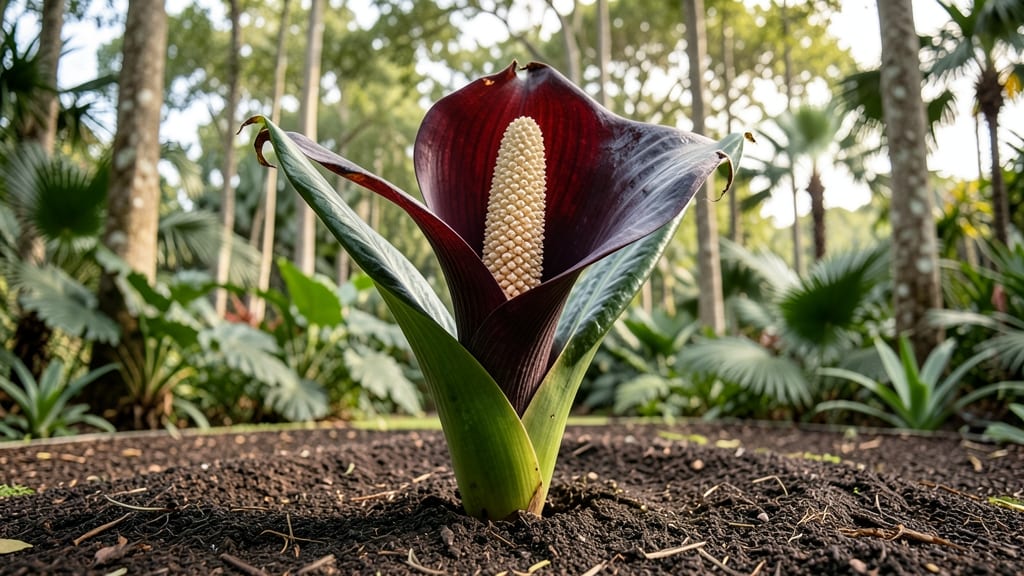
Botanical gardens use smelly plants that emit strong aromas like sulfur, skatole, or cadaverine to serve ecological purposes, such as mimicking rotting flesh to attract pollinators or repelling herbivores. Species like the corpse flower and garlic mustard are intentionally cultivated in controlled environments to demonstrate these fascinating survival strategies.
These plants aren't just stinky—their odors are carefully evolved survival tools. 🌿 For example, the stinking corpse flower releases a scent resembling decaying meat to lure flies for pollination, while skunk cabbage emits a foul odor to deter hungry animals.
Botanical gardens often place these plants in designated "sensory zones" where visitors can experience their aromas from a safe distance, pairing them with educational signage about their ecological roles.
When growing these plants at home, consider wind direction and visitor traffic patterns to minimize odor complaints. Most thrive in moist, well-drained soil with partial shade, though some like garlic mustard are hardy enough for full sun.
Always wear gloves when handling—some compounds can irritate skin, and the smells linger on clothing!
💡 In This Article
- How Smelly Plants Use Odors for Survival
- Safety and Design Tips for Growing Smelly Plants
How smelly plants use odors for survival
Many botanical garden plants rely on strong aromas as their primary survival strategy. These odors are produced through volatile organic compounds (VOCs) like sulfur-containing thiols, which create that signature "rotten" smell.
For example, the corpse flower (Amorphophallus titanum) releases dimethyl disulfide and dimethyl trisulfide—compounds that mimic rotting meat to attract carrion flies for pollination. These VOCs are so potent they can be detected up to 30 feet away, making them one of nature's most effective pollinator lures. 💫
The chemical mechanisms behind these scents are fascinating. Plants like skunk cabbage (Symplocarpus foetidus) produce methyl mercaptan, a compound also found in skunk spray, which deters herbivores while signaling to decomposers that the plant is "dead" and safe to approach.
Meanwhile, garlic mustard (Alliaria petiolata) emits allyl isothiocyanate, a sulfur compound that repels insects while also suppressing competing plant species through a process called allelopathy. These chemical defenses are often more effective than physical barriers like thorns.
What's particularly clever is how these scents are timed. Many carrion flowers only release their foul odors at night or during specific humidity levels, ensuring pollinators arrive when the plant is most receptive.
The corpse flower, for instance, maintains its scent for 24-72 hours during its rare blooming period, creating a temporary "feeding station" that flies can't resist. This precision in chemical signaling demonstrates how plants have evolved to exploit animal behaviors for their own reproduction. 🔥
Interestingly, not all smelly plants rely on deception. Some, like the stinking hellebore (Helleborus foetidus), produce odors that repel pests without attracting pollinators. These plants often have small, inconspicuous flowers that don't need to advertise themselves—their chemical defenses do the work.
The diversity of these strategies shows how strongly natural selection favors plants that can manipulate their environments through scent, whether through attraction or deterrence.
For botanical gardens, this means these plants serve dual purposes: they're living laboratories for studying plant chemistry and ecological interactions.
Visitors often experience the corpse flower's bloom as a once-in-a-lifetime event because its scent is so overwhelmingly powerful—yet this very trait makes it a perfect specimen for demonstrating how plants have evolved to exploit the animal kingdom's senses.
The key takeaway is that these odors aren't just random byproducts; they're sophisticated survival tools honed over millions of years. ✨
Understanding these mechanisms helps explain why botanical gardens often place smelly plants in isolated "sensory gardens" rather than mixing them with more pleasant species. The controlled environment allows visitors to appreciate these plants' ecological roles without overwhelming the garden's overall ambiance.
It's a perfect example of how form and function work together in the plant kingdom. 🌿