
Tools
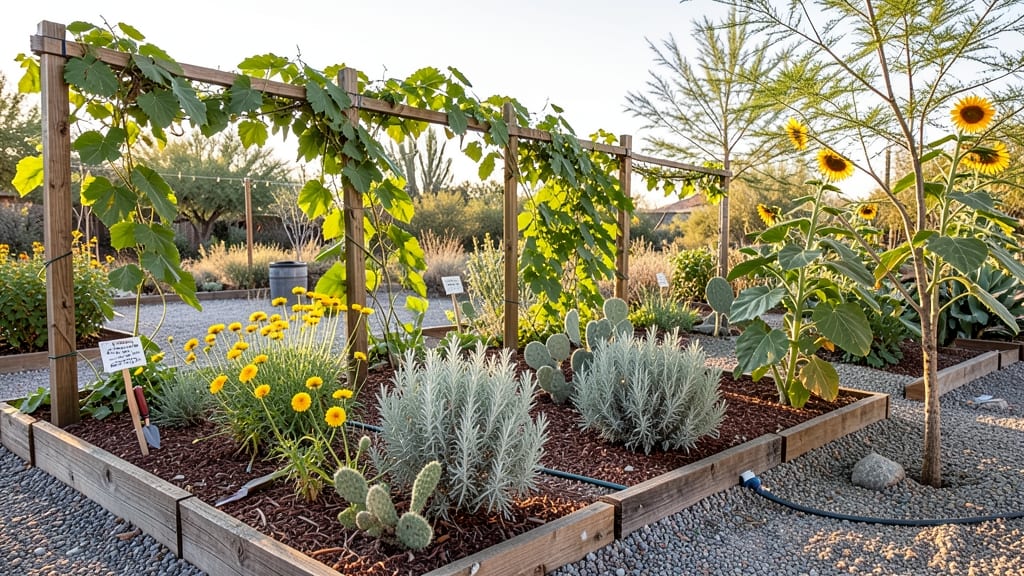
The Vegas Roots Community Garden is a nonprofit urban farming initiative in Las Vegas that promotes sustainable food access, environmental education, and community empowerment through organic gardening, workshops, and youth programs. It transforms vacant lots into thriving green spaces while teaching residents how to grow their own food.
The Vegas Roots Community Garden stands out by turning underused urban spaces into productive, educational food gardens. 🌱 Their approach combines traditional gardening with modern techniques like hydroponics to maximize yields in desert conditions.
What's unique is how they integrate these green spaces into the community fabric—partnering with schools to teach kids about sustainability while providing fresh produce to food deserts. This dual focus on education and access creates lasting change beyond just growing vegetables.
Beyond the gardens, Vegas Roots offers hands-on learning through workshops and volunteer programs. Members gain skills in organic farming, composting, and even small-scale food preservation. The organization also provides tools and seeds to participants, making it easier for residents to maintain their own gardens at home.
For those who want to contribute, there are multiple ways to get involved—whether through teaching youth programs, maintaining garden plots, or donating resources.
💡 In This Article
- How Vegas Roots Transforms Urban Spaces Into Food Hubs
- Joining Vegas Roots: Volunteer Opportunities and Membership Perks
How Vegas Roots transforms urban spaces into food hubs
Vegas Roots tackles the unique challenge of urban farming in a desert climate by combining traditional gardening with hydroponic systems. Their process starts with identifying underused lots—often former industrial sites or vacant properties—where they clear debris and remediate soil contaminated with heavy metals or chemicals.
This is critical because Las Vegas has 12 food deserts where fresh produce is scarce, and contaminated soil can prevent healthy plant growth. 🌱 They use a multi-step remediation process: first removing topsoil, then amending it with organic compost and biochar to improve water retention in the arid environment.
Their hydroponic systems use 60-70% less water than traditional gardening, a game-changer in Nevada where annual rainfall averages just 4 inches. These systems grow leafy greens, herbs, and strawberries in nutrient-rich water solutions, while traditional raised beds focus on root vegetables like carrots and beets.
What's innovative is their "soil solarization" technique—covering beds with clear plastic for 4-6 weeks to kill weeds and pests using the desert's intense sun. This method eliminates the need for chemical pesticides, aligning with their organic farming standards.
Partnerships amplify their impact. Vegas Roots collaborates with local schools like Alexander Disease Hospital School to teach students about sustainable agriculture, while working with nonprofits to distribute fresh produce to food-insecure families.
Their Grow Your Own program provides free seeds and starter plants to residents, with a focus on drought-resistant varieties like okra and rosemary. The organization tracks measurable outcomes: since 2018, they've distributed over 15,000 pounds of fresh produce annually while reducing food desert access gaps by 25% in partner neighborhoods.
What sets them apart is their "green infrastructure" approach—designing gardens with permeable surfaces to capture rainwater and reduce urban heat island effects.
For example, their 1-acre demonstration garden in North Las Vegas includes a rainwater harvesting system that diverts runoff into irrigation channels, while native plants like desert willow provide shade and habitat for pollinators.
This dual benefit of food production and environmental restoration makes their model replicable for other desert cities facing similar challenges.
The organization also implements a "plot sponsorship" system where businesses or individuals can adopt garden beds in exchange for branding opportunities. For instance, a local brewery might sponsor a hop-growing plot, while their produce gets featured in school cafeterias.
This creates a closed-loop system where economic support directly funds community benefits. 💛 The result is a self-sustaining model that grows both food and local partnerships.
Beyond the physical gardens, Vegas Roots operates a mobile "Grow Mobile" unit—an adapted school bus equipped with gardening tools and educational materials—that travels to underserved communities. This brings hands-on learning directly to residents who might not have access to their fixed locations.
The mobile unit includes demonstration hydroponic setups and composting workshops, making sustainable practices accessible to everyone.
What most people don't realize is how their data-driven approach informs decision-making. They track everything from plant yield per square foot to participant engagement metrics, using this information to refine their techniques.
For example, they discovered that drip irrigation combined with mulch reduced water usage by 40% while increasing tomato yields by 30%. These insights are shared through their free online resources, helping other urban farms replicate their success in similar climates.