
Tools
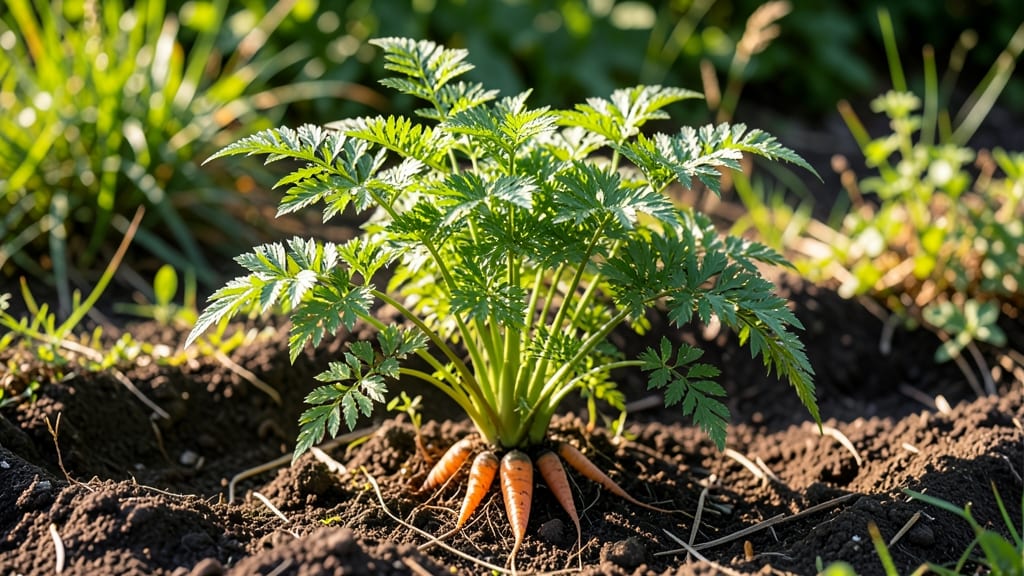
Carrot tops in the garden look like delicate, feathery ferns with finely cut, lacy green leaves growing in a tight rosette just above the soil. These fronds are deeply lobed and typically stay between 6–12 inches tall, though their color may darken slightly in shadier spots.
These garden greens are easy to spot once you know what to look for—their signature pinnate (feather-like) structure sets them apart from other leafy plants. 🌿 Young seedlings start with small, rounded leaves that gradually develop into the intricate, almost lace-like fronds you see at maturity.
I've noticed that purple-tinged varieties (like 'Purple Haze') add a stunning contrast to the garden, while standard green types stay vibrant in full sun.
What makes carrot tops particularly distinctive is how they hug the ground in a dense cluster, unlike the more upright growth of plants like cilantro or chervil. The leaves also have a slightly sandy texture when brushed against, which helps differentiate them from smoother-leaved greens.
If you're still unsure, check the base—carrot tops grow directly from the swollen taproot, a dead giveaway!
💡 In This Article
- Identifying Carrot Leaf Growth Stages and Shapes
- Differentiating Carrot Tops from Other Garden Greens
Identifying carrot leaf growth stages and shapes
The journey from seed to mature carrot top begins with tiny, rounded cotyledons that emerge just above the soil. These first leaves, often overlooked, are simple and oval-shaped—about ½ inch wide—and serve as the plant's initial energy source.
Within 2-3 weeks, true leaves appear, transforming into the iconic pinnate (feather-like) structure that defines carrot foliage. Each leaf unfurls from the central stem in a zigzag pattern, with fine, thread-like leaflets (called pinnules) branching out like delicate ferns.
As the plant matures, these leaflets become progressively more divided, creating that signature lacy appearance. By the time the carrot root reaches harvest size (3-4 months), the foliage typically spans 6-12 inches in diameter, though some heirloom varieties like 'Danvers' can reach 14 inches under ideal conditions.
The color isn't always uniform—standard types stay vibrant green, while purple-tinged varieties (like 'Purple Haze') develop deep burgundy hues in sunlight, adding a striking contrast to the garden. 🌱
What's fascinating is how the leaf structure reflects the plant's growth strategy. Carrot tops grow in a rosette pattern, keeping all leaves close to the soil to maximize sunlight capture while protecting the developing root below.
This compact growth habit also helps conserve moisture, which explains why carrot tops thrive in cooler climates where other greens might bolt. The leaves' sandy texture comes from tiny, hair-like structures called trichomes that help reduce water loss—something you'll notice when gently brushing your fingers across the fronds.
Seasonal variations play a role too. Early spring seedlings start with softer, lighter green leaves that darken as temperatures rise. In full sun, the foliage stays bright and crisp, while shade can cause leaves to elongate and develop a duller, almost olive-green tint.
This is why gardeners in partial-shade areas often see carrot tops that look slightly less vibrant than their sun-grown counterparts. The key identifier remains the feather-like division—no other common garden green mimics this precise leaf structure.
One common misconception is that all carrot tops look identical, but varieties differ significantly. For example, 'Paris Market' carrots produce narrower, more upright foliage compared to the bushier 'Chantenay' type.
Even within the same variety, leaf shape can vary based on soil pH—alkaline soils often produce slightly broader leaves, while acidic conditions yield finer, more delicate fronds. This variability is why gardeners should always check both the foliage and the root shape when identifying carrot plants.
Here's what to watch for at each growth stage:
- Seedling (0-3 weeks): Small, rounded cotyledons with no visible leaflets
- Juvenile (3-6 weeks): Emerging pinnate leaves with 3-5 main leaflets
- Mature (6-12 weeks): Fully divided fronds with 7-12 leaflets per leaf
- Harvest-ready (3-4 months): Dense rosette with 6-12 inches of feathery growth
The most reliable way to confirm you've got carrot tops? Look for the taproot—carrot foliage always grows directly from the swollen, edible root, unlike many weeds that have fibrous root systems. This connection is your ultimate identifier in mixed garden beds. 💫