
Tools
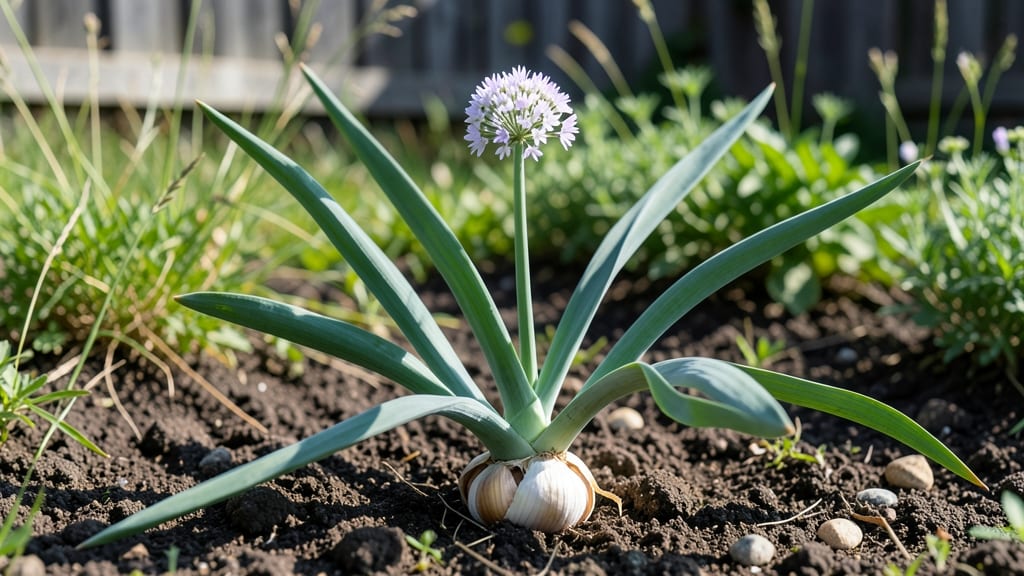
Garlic in the garden looks like slender green shoots 3–6 inches tall with narrow, grass-like leaves at first, then develops a bulb underground with papery white skins and segmented cloves. Mature plants show browned, dried leaves before they're ready for harvest.
Garlic's early growth phase is all about those thin, vibrant green stalks that emerge first. 🌱 These shoots can reach 6 inches tall before the real magic happens underground, where the bulb starts forming.
What's fascinating is how the leaves change—starting bright green, then turning yellowish-brown as the plant matures. This color shift signals that the cloves inside are fully developed and ready for harvesting.
One thing I always tell gardeners is to pay attention to the stalk height and leaf condition. Healthy garlic should have sturdy stalks and no signs of wilting or discoloration beyond the natural browning.
If you notice mold, soft spots, or unusual leaf patterns, it might be dealing with pests or disease—something worth addressing before harvest time.
Pro tip: The papery white skins on mature bulbs are actually protective layers that form naturally as the cloves develop. These skins keep the garlic fresh longer, which is why harvesting at the right time (when about half the leaves have dried) makes all the difference in storage quality.
💡 In This Article
- Garlic Growth Stages: Visual Identification Guide
- How to Spot Healthy vs Diseased Garden Garlic
Garlic growth stages: visual identification guide
Garlic's journey in the garden begins with sprouting, where tiny green shoots emerge from the soil, resembling delicate grass blades. These early stalks grow 1-2 inches per week under ideal conditions (full sun, well-draining soil, and consistent moisture).
The leaves are hollow and tubular, with a slight waxy coating that helps retain moisture—a key adaptation for surviving dry spells. 🌱 What's scientifically fascinating is how these leaves act as the plant's primary food producers through photosynthesis, while simultaneously channeling nutrients downward to develop the bulb.
The next phase features leaf development, where the stalks elongate to 12-24 inches tall depending on the variety. Softneck varieties like Silverskin typically grow taller (up to 2 feet) compared to hardneck varieties like Rocky Mountain (around 18 inches).
During this stage, the leaves transition from bright green to a deeper green-blue hue, thanks to anthocyanin pigments that help protect the plant from UV radiation. The bulb below ground begins forming 6-8 weeks after sprouting, with individual cloves developing from the original seed clove.
Bulb formation marks the most dramatic transformation, where the plant redirects energy from leaf production to underground storage. You'll notice the leaves start yellowing at the tips—this is nature's signal that the cloves are swelling with nutrients.
The papery white skins (technically modified leaf bases) begin forming around 10-12 weeks of growth, providing a protective barrier against moisture loss and pathogens. 🌿 The bulb's structure is particularly interesting: each segment (clove) contains a miniature plant with its own root system, ready to sprout when separated.
Maturity arrives when 50-60% of the leaves have turned brown and crispy, a process called senescence. This natural drying indicates the bulb has reached its full size and nutrient density.
The bulb itself typically measures 2-3 inches in diameter, with individual cloves arranged in a circular pattern around a central stem. What's often overlooked is how the bulb's weight increases 10-15 times from its original seed clove size—a remarkable example of plant growth efficiency.
Environmental factors dramatically influence these stages. Cool temperatures (50-60°F) during bulb formation produce larger cloves, while hotter conditions (> 85°F) can cause premature leaf drying.
Rainfall also plays a role: too much moisture late in the season can lead to sprouting (when cloves send up shoots) or mold on the bulb skins. The ideal scenario is 1 inch of water per week during the growing season, delivered through rainfall or irrigation.
For gardeners, recognizing these stages is crucial for timing harvests. The 10% rule applies here: wait until 10% of the leaves remain green before pulling bulbs. This ensures maximum size without sacrificing flavor or storage potential.
The dried leaves also make the bulbs easier to clean and store—simply brush off excess dirt and let them cure in a dry, shaded area for 2-3 weeks before braiding or storing in mesh bags.