
Blooming
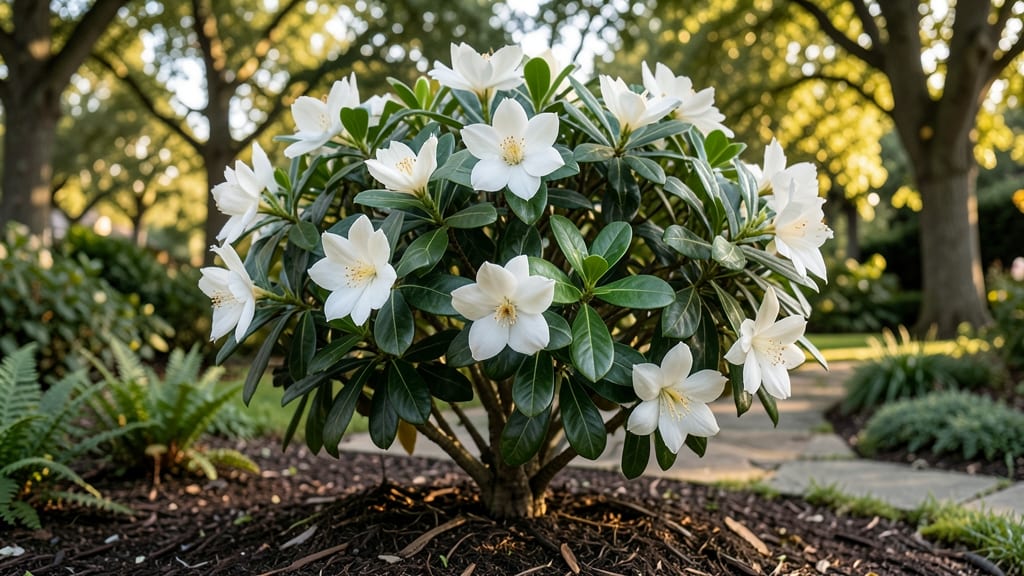
Gardenia blooms typically occur in late spring to early summer, usually between May and July, though certain varieties like Gardenia jasminoides may continue flowering into fall with consistent care. Warmer climates (Zones 8-11) often enjoy extended or year-round blooming periods, while cooler regions (Zones 5-7) usually experience a single spring bloom after winter dormancy.
Gardenia flowering cycles are heavily influenced by temperature and daylight hours. 🌸 In my experience, gardenias planted in Zones 9-11 often produce staggered blooms throughout summer and even into early autumn, while those in Zones 5-7 typically need winter dormancy to trigger their spring display.
The key to encouraging repeat blooming lies in maintaining consistent moisture and slightly acidic soil (pH 5.0-6.5), which helps prevent stress that can delay flowering. For example, gardenias in containers may bloom earlier than their in-ground counterparts since they can be moved to optimize sunlight exposure.
What many gardeners don't realize is that gardenias actually set flower buds in the previous growing season. This means that summer care—like regular but not excessive watering and avoiding heavy pruning—directly impacts next year's bloom timing.
I've found that using a balanced fertilizer (like 10-10-10) in early spring gives my gardenias the nutrients they need to produce abundant flowers, while avoiding late-season fertilizers prevents new growth that could be damaged by frost.
💡 In This Article
- Gardenia Bloom Seasons by Variety and Growing Conditions
- Extending Gardenia Blooms: Pruning and Care Tips
Gardenia bloom seasons by variety and growing conditions
The timing of gardenia blooms varies dramatically between species and cultivars, with Gardenia jasminoides (common gardenia) being the most widely recognized for its late spring to early summer display. This variety typically begins bud formation in late winter, with flowers opening between May and July in most temperate regions.
What's fascinating is how these tropical natives adapt: in their native habitats of Southeast Asia, they bloom year-round, but in cooler climates, they've evolved a seasonal response to temperature shifts. 🌸
For gardeners in Zones 8-11, the story is different—many varieties like Gardenia augusta (synonymous with G. jasminoides) can produce staggered blooms throughout summer and even into early fall. This happens because warmer temperatures maintain consistent growth without the winter dormancy period that triggers spring blooming in cooler zones.
The Gardenia radicans (Cape Jasmine), however, often blooms later in the season, typically from July through September, making it a valuable late-season performer for gardeners seeking extended floral interest.
Light exposure plays a crucial role in bloom timing. Gardenias thrive in partial shade (4-6 hours of morning sun), but too much direct afternoon sun can stress the plant and delay flowering.
In my experience, gardenias in containers placed on east-facing patios often bloom 2-3 weeks earlier than those planted in full sun, as the gentler morning light prevents heat stress. Soil acidity is another critical factor—maintaining a pH between 5.0-6.5 ensures optimal nutrient uptake, which directly impacts flower bud formation. 💧
Daylength sensitivity also affects bloom timing. Gardenias are short-day plants, meaning they respond to decreasing daylight hours in late summer to trigger flower buds for the following season.
This is why gardeners in northern climates (Zones 5-7) often see their gardenias produce a single spectacular spring bloom—after winter dormancy, the plants focus all their energy on one flush of flowers before entering a period of rest.
In contrast, gardenias in Zones 9-11 may produce multiple bloom cycles because they don't experience the same dramatic seasonal temperature shifts.
Climate also influences bloom intensity. Gardenias planted in humid coastal regions often produce larger, more abundant flowers than those in dry inland areas. The reason? Consistent moisture prevents the plant from entering stress-induced dormancy.
I've noticed that gardenias in my Zone 9 garden receive about 1-2 inches of water weekly, which keeps the soil evenly moist but not waterlogged—a balance that encourages continuous blooming. In drier climates, supplemental irrigation becomes essential to maintain this moisture level.
One variety worth highlighting is Gardenia thunbergia, which blooms later in the season (typically August through October) and produces smaller, more delicate flowers compared to the classic gardenia. This species is particularly well-suited for gardeners in Zones 7-10 who want to extend their gardenia season into autumn.
The key to encouraging late blooms in any variety is consistent care—avoiding heavy pruning in late summer and maintaining regular fertilization with a low-nitrogen, high-phosphorus formula (like 5-10-10) to support flower production.