
Watering
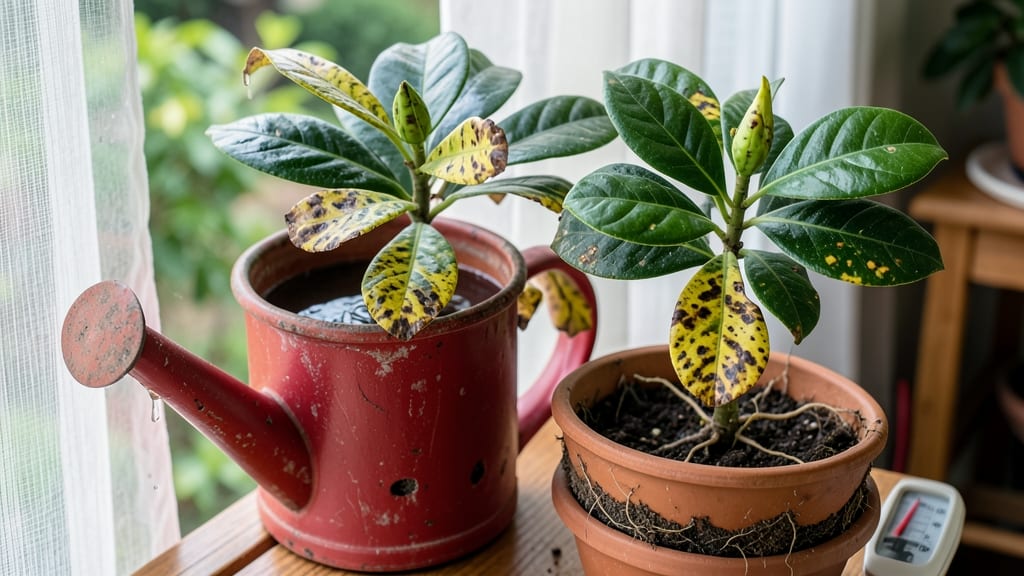
When your gardenia develops yellow leaves from the overwatered gardenia, it's a clear sign of root rot and nutrient depletion that demands urgent action—adjust soil drainage immediately, trim affected foliage, and repot in fresh, well-draining mix to restore balance.
A yellow overwatered gardenia suffers when its roots can't breathe, leading to yellowing leaves that signal stress. 🌿 The problem starts with compacted soil that traps moisture, starving roots of oxygen and causing them to rot. This disrupts nutrient uptake, particularly iron and nitrogen, which are essential for vibrant foliage.
I've seen gardeners make the mistake of watering on a strict schedule without checking soil moisture first—always stick your finger an inch deep before watering. The key is balance: too much water drowns roots, while too little causes wilting, but both scenarios create the same yellowing symptoms.
Once you've identified the issue, act fast to prevent permanent damage. Start by removing the plant from its pot and inspecting the roots—any that appear mushy or black should be trimmed away with sterilized scissors.
Repotting in a container with drainage holes and a mix of peat moss, perlite, and sand creates the ideal environment for recovery. After repotting, reduce watering frequency to every 7-10 days and avoid fertilizing until new growth appears, typically within 4-6 weeks.
💡 In This Article
- Why Overwatering Turns Gardenia Leaves Yellow
- Step-by-Step Recovery Plan for Overwatered Gardenias
Why overwatering turns gardenia leaves yellow
The science behind yellowing gardenia leaves starts with root suffocation. Gardenias thrive in well-draining soil where roots can access both water and oxygen. When you overwater, the excess moisture displaces air pockets in the soil, creating an anaerobic environment.
Roots deprived of oxygen begin to suffocate, triggering a chain reaction that disrupts nutrient uptake. 🌱 This is particularly critical for gardenias, which are sensitive to waterlogged conditions and prefer slightly acidic, aerated soil with a pH between 5.0 and 6.5.
Oxygen deprivation leads to root rot, where beneficial microbes that help break down nutrients can't function. Without oxygen, roots start to decay, releasing toxic compounds that travel upward through the plant's vascular system.
This disrupts the transport of essential nutrients like iron and nitrogen, which are vital for chlorophyll production—the green pigment in leaves. When chlorophyll breaks down, leaves lose their vibrant color and turn yellow, a condition known as chlorosis.
You'll often see this yellowing start at the older leaves first, as the plant prioritizes sending nutrients to newer growth.
Excess moisture also causes nutrient leaching, where vital minerals wash away from the root zone. Gardenias need a steady supply of micronutrients like magnesium and zinc, which are easily flushed out when soil remains soggy.
The plant's natural defense mechanism kicks in, breaking down chlorophyll to conserve energy, which accelerates the yellowing process. 💡 What's fascinating is that this isn't just about water quantity—it's about the balance between moisture and aeration.
Even if your gardenia is in a pot with drainage holes, compacted soil can still trap excess water, creating the same suffocating conditions.
Another critical factor is how water affects soil chemistry. Overwatering increases soil salinity as dissolved minerals accumulate near the roots. This creates an osmotic imbalance, making it harder for the plant to absorb water and nutrients even when the soil appears moist.
The roots essentially "drown" in a nutrient-saturated environment, further exacerbating the yellowing and wilting symptoms. This is why gardenias in containers are particularly vulnerable—they rely entirely on you to maintain the right moisture balance, unlike in-ground plants that have more natural drainage.
Visually, you can often spot the signs before leaves turn yellow. Look for soggy soil that stays damp for more than a day after watering, or roots that appear black and mushy when you gently remove the plant from its pot.
The leaves may also develop a leathery texture or drop prematurely, as the plant struggles to maintain its structural integrity. In severe cases, you might even notice a foul odor emanating from the soil, which is a clear indicator of bacterial or fungal root rot setting in.
Understanding this process helps you act faster. The moment you notice yellowing leaves, it's a red flag that your gardenia's roots are already under stress. The key is to intervene before the rot spreads to healthy roots, which can happen within just 48-72 hours of prolonged waterlogging.
By addressing both the moisture issue and the nutrient imbalance, you give your gardenia the best chance to recover and regrow its vibrant, healthy foliage.